The Blur Before the Reveal: An Interview with Zeynep Beler
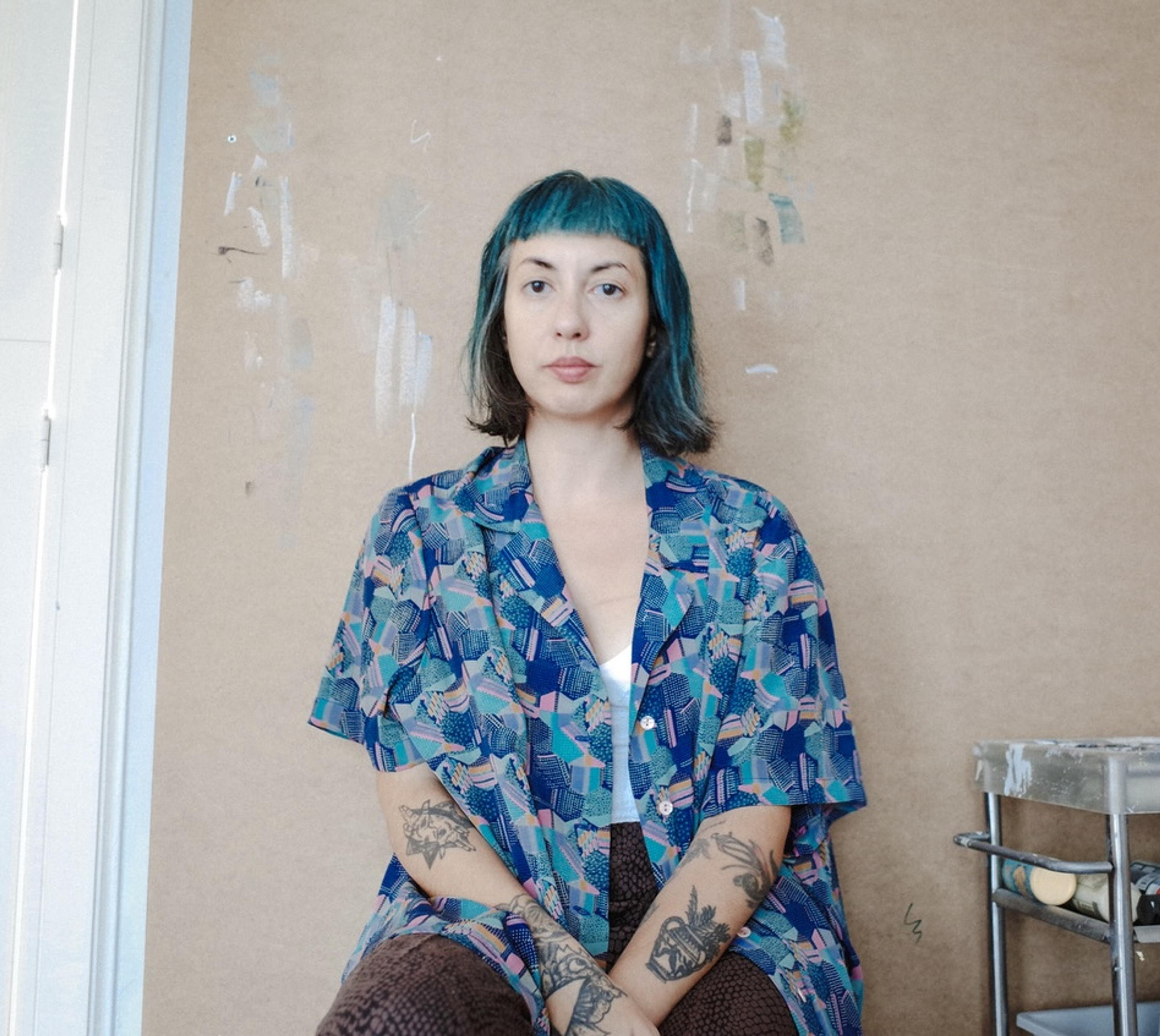
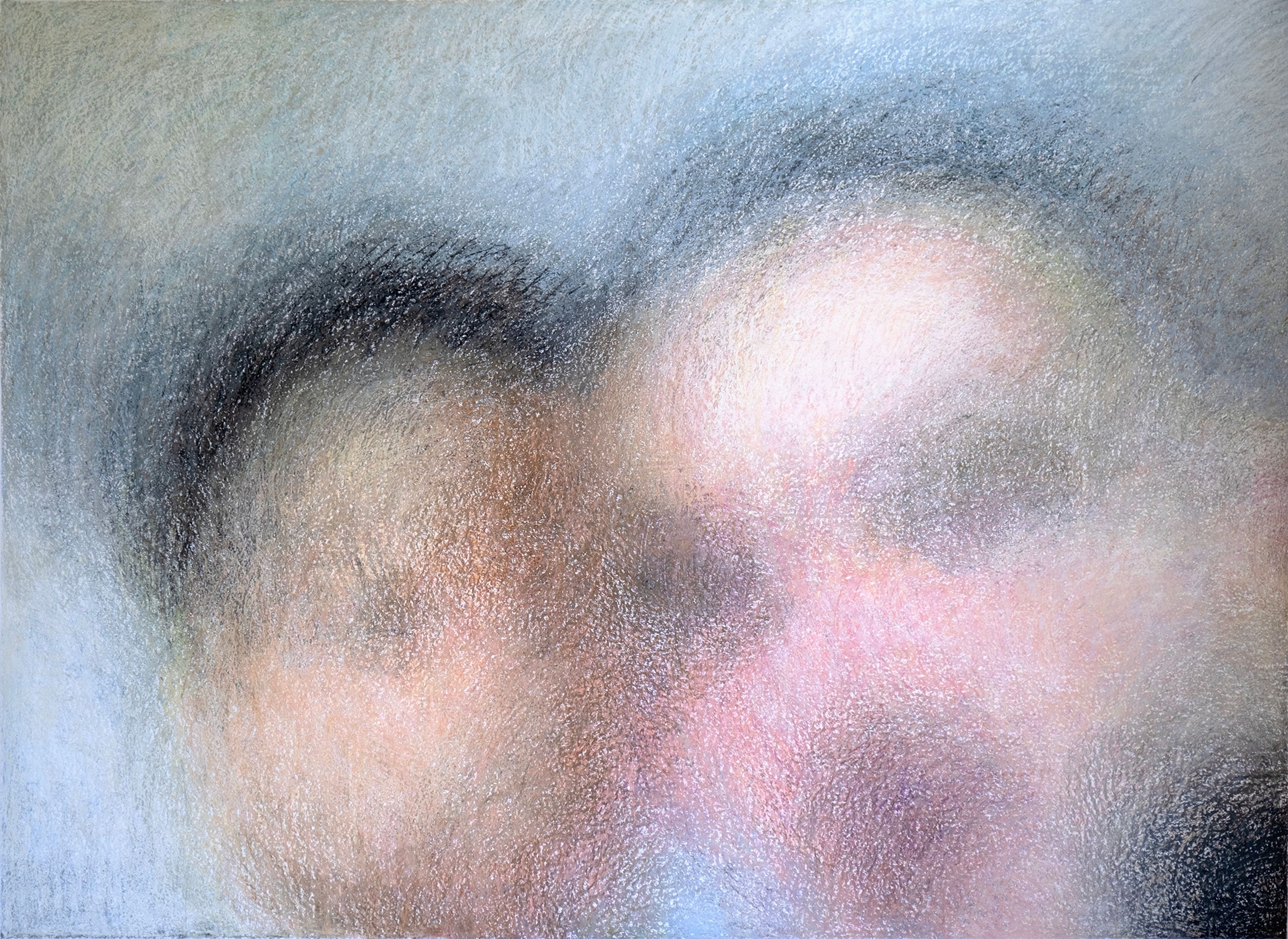
Zeynep Beler, the December '24 myma artist grant recipient, is an Istanbul-based painter whose practice is shaped by the blurred boundaries between painting, photography, and vernacular imagery. In conversation with artist Anna Berghuis, Beler shares how her current body of work probes the visual detritus of everyday life — images with no share value, cluttering camera rolls and lacking obvious indexical function. These “bad” or utilitarian images become starting points for a new kind of latent image, one that hovers in the liminal space of user attention.
Congratulations on winning the December myma grant! Can you tell us a bit about yourself and your practice?
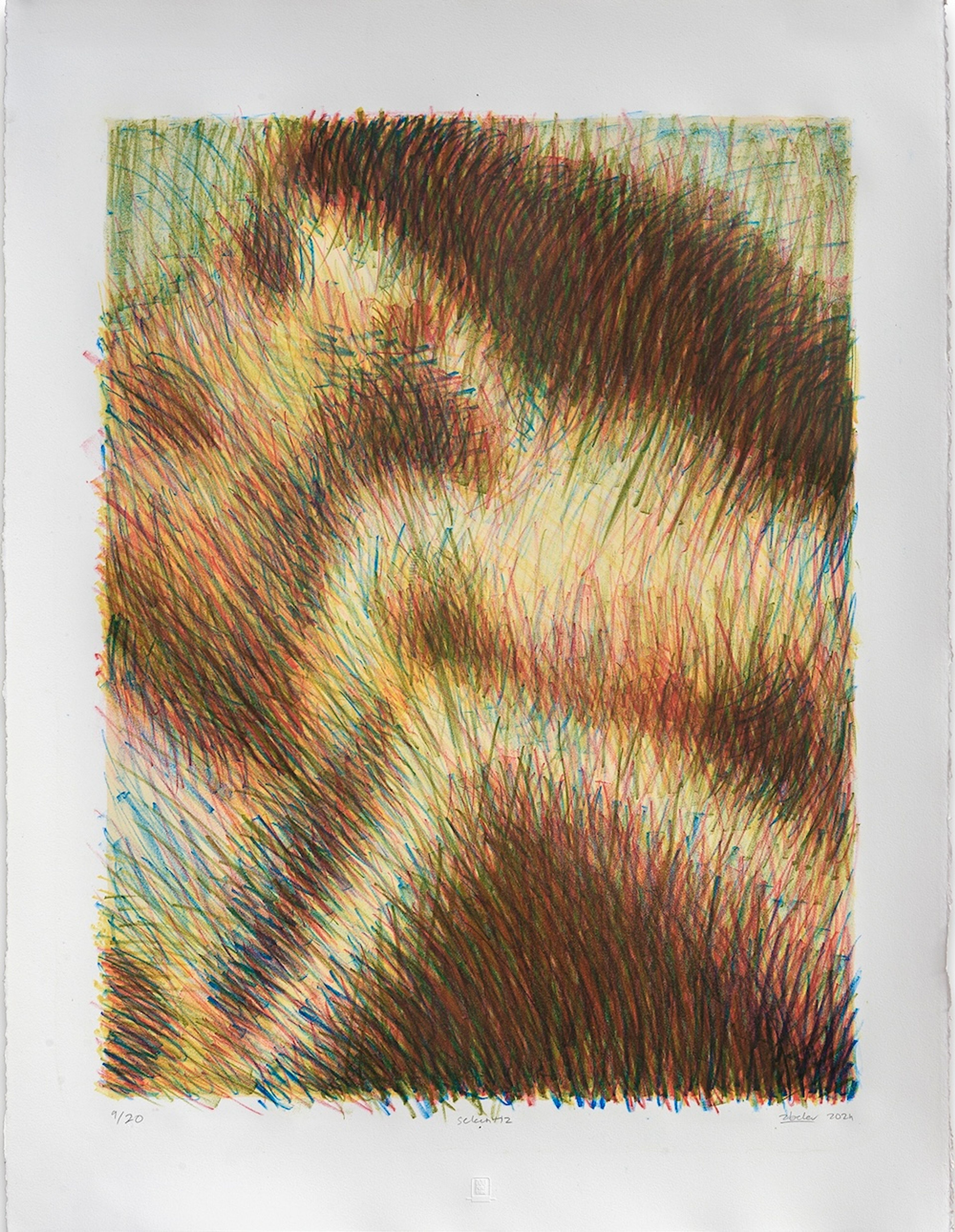
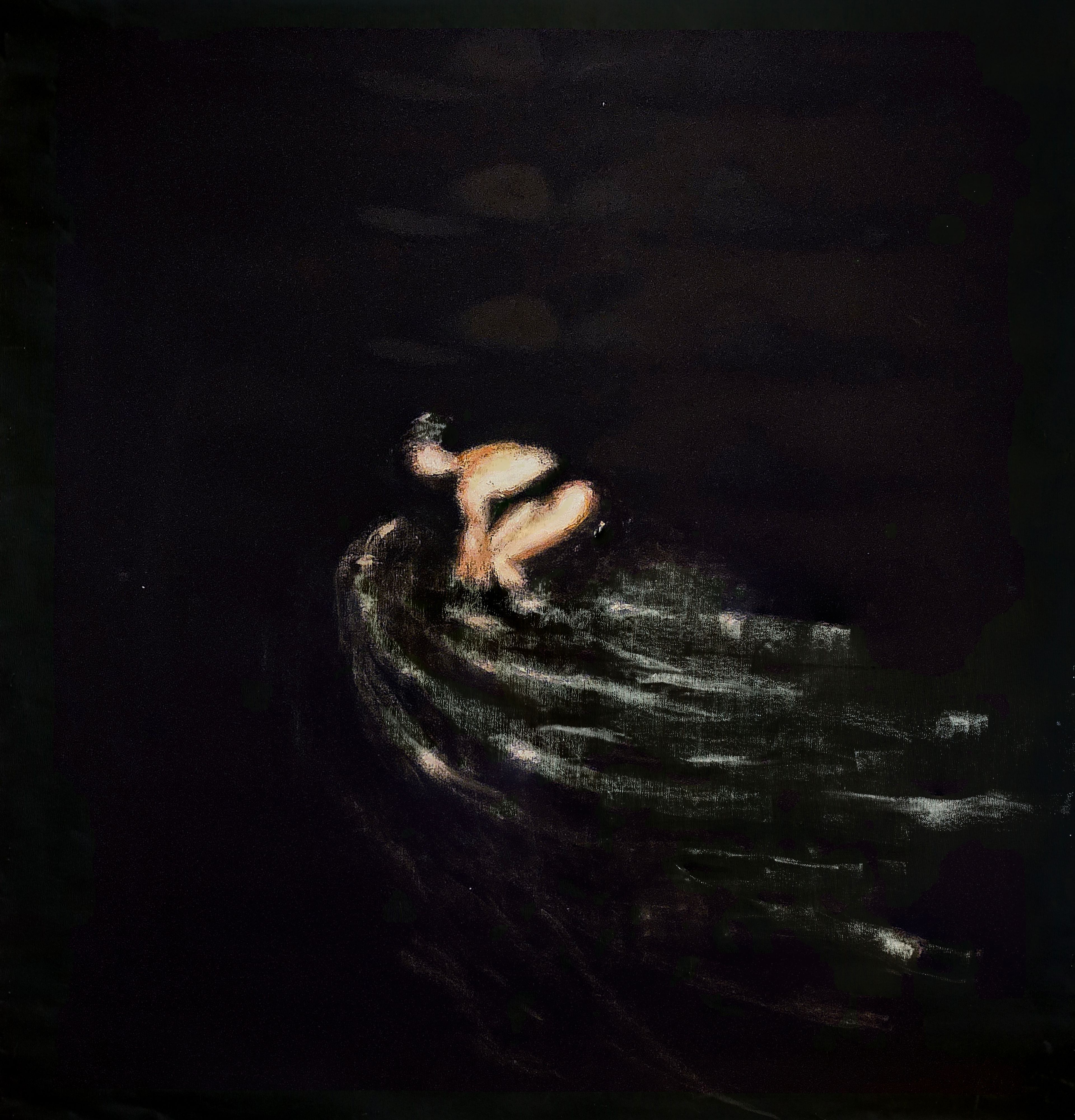
Thank you! I’m a photographer turned painter whose practice is still heavily informed by representational media and indexicality. I’m fascinated by those images that we consider bad or unusable or otherwise solely functional. Currently I’m working on a body of work that focuses on a certain type of visual, one that exists on the threshold of legibility and illegibility, drawing the viewer-as-user into a suspended state of anticipation and/or apprehension.
What is it about “bad” or “orphaned” images that captivates you, and how do they inform your work?
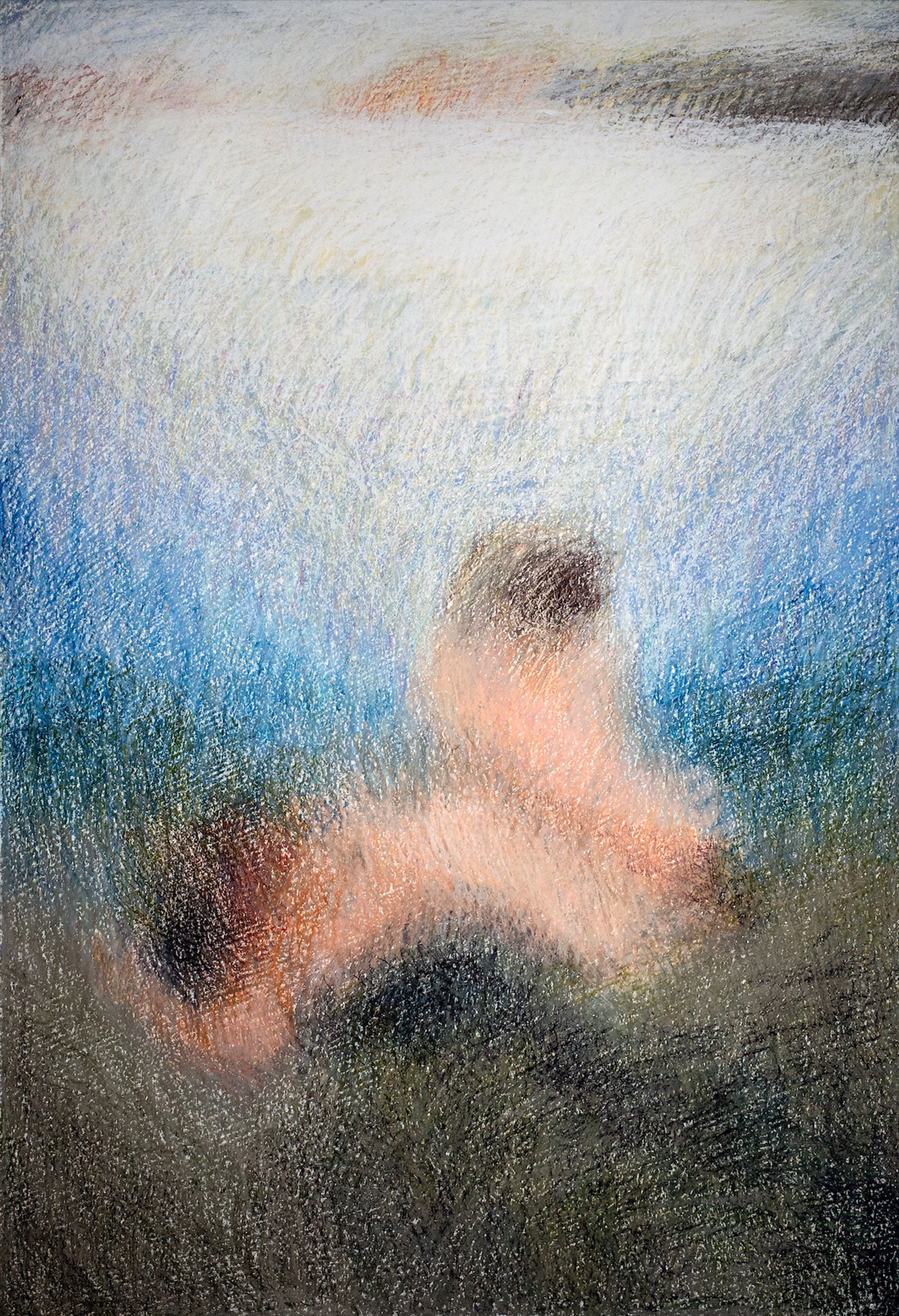
By these I refer to images that are the flotsam of the great river of the internet and social media, authorless, immediately forgettable and unserious pictures that are, say, screenshotted so many times over or so zoomed in that their resolution has already broken down into something painterly. One wouldn’t ordinarily pay attention to them for longer than the split-second that media today requires of us. These are both fun to paint and interesting to translate from pixel noise into paint texture.
How do you decide which images from your camera roll or social media feeds to render?
It’s visceral rather than logical. I take a ton of screenshots and then filter them out - the process has become more refined over time, as I know what I want to try with the next painting and what source image will open up that up to me.
You mention being influenced by Jaron Lanier’s idea of “the digital flattening of expression.” How does this concept shape your work?
There needs to be a lot of redundancy in information, and it’s what falls outside of that, the generic, that mostly makes it to us. It’s how we make sure information is received because there’s bound to be losses in transmission. This tenet is part of the reason (alongside the hegemony of oligarchs, obviously) why the internet feels like one big monologue. While the noise and redundancy interest me, I simultaneously have to try to not let my sensibility as a painter get flattened as well, yanked around by the algorithm. For instance, we start thinking about installation shots of our paintings, their legibility on the little screen. I responded to this by starting to take my installation shots of a painting’s final moments on the wall of my studio, framing it in its messy place of origin, but it’s still what it is: thinking about my work on the grid.
Can you elaborate on your interest in latency and liminality—how do these themes emerge in your work, and what do they mean to you?
The idea of suspended attention is interesting to me - almost everywhere you look is engineered to channel your attention into a revenue stream or an agenda. LQIP is one way of doing that, so to me the idea is interesting that the semi-opaque attention trap is often more intriguing than what it leads to: someone’s selfie or lunch, for example. That pocket of attention, your anticipation and desire for the reveal and willingness to step over the threshold is intrinsic to these images.
How has your background in photographic theory influenced your approach to painting? I still read theory, but it’s more for me than the viewer. I need that contextual research to hold a series together—without it, the work feels unmoored to me. I always say I'm a human rendering machine and I set up prompts for myself. I don’t think outwardly it reflects on the viewer unless they choose to look it up.
Your focus on “low quality image placeholders” is fascinating. How do you translate the idea of latency in digital images into your physical artworks?
The concept of the “latent image” refers to the imprint of light on photosensitive material, and then later to the undeciphered code of the digital image, so the negative or the binary data. I feel like the LQIP might be a new kind of latent image, except in this instance the developing agent is the user’s connectivity combined with their attention span. It’s the same with images that are censored by likewise blurring and slowly becoming legible to avoid triggers or spoilers. There’s an aspect of the cinematic there as well, which reinforces the idea that media is a palimpsest and imagery, a constant, moves through all these forms.
Can you share more about the long exposure photograph of moonlight on your kitchen floor? How did it deepen your understanding of your work’s themes? When I took those long exposures, I’d been pretty estranged from my original medium, photography, for a few years. Lately, I've started easing back into it with my little compact camera, mostly documenting my community on the island where I live. In my previous life as a photographer, I photographed very much like a painter: setting up the camera and frames with great care, doing many long exposures, very deliberate. The square of moonlight took me back to that mode of image making, doing nothing but pay attention for thirty, sixty seconds, holding your breath. I realized how naturally my practice as a photographer has evolved into my practice today.
How do your personal experiences, such as your sea commute, inform the way you approach your art? I started saving screenshots of LQIP’s because for the past seven years, I've had a long commute by sea. Sitting on the ferry with a very poor connection, I’d wait for images to load often to no end. Eventually, I began collecting these arrested images and thinking about the people who designed this particular aspect of the user experience. We used to have gray squares, then a developer sat down and wrote the code that generates these placeholders. These were in my phone for a very long time, I think I tried to render a few with oil paints, which was my primary medium, and found both the process and the results uninteresting. Then in 2021, when I was confined indoors with a bad case of COVID and not even in my own flat, I sent for a set of oil pastels on a delivery app because that was what they had as far as art supplies. And I had a eureka moment. Happenstance plays a huge role in my process.
Can you walk us through your daily practice? How do you balance painting, photography, and writing? I’m easily distracted and it helps tremendously to have different stations for different practices. A small desk for journaling and drawing, a large desk for work on the PC, research etc. and a large wall for the painting. I usually start the day in the studio by journaling, which really gets my head together. I think it’s at least if not more the whole tactical experience of being seated, the scratching of the pen on the paper, etc. that does it as the act of journaling itself. Then I try to draw a little before going to the other desk to answer emails and check the news and stuff. Sometimes I potter around and tidy the studio, which is a habit I picked up from my partner (I used to live and work like a raccoon in the middle of piles of junk). I think the whole thing is a semi-productive mode of procrastination before I get to the big thing, the painting on the wall.
How do you think your work comments on or challenges the role of the “user” in today’s digital age?
I feel like I’m not challenging it if I’m not quitting it, but I try to seek some sense of agency in a role that’s made more and more passive every day.
What do you hope viewers take away from your exploration of suspended attention and crystallized temporality?
I don’t have specific expectations for viewers. I enjoy it when someone comes up to me and says, 'I’m seeing a frog. Is that what that is?' I like when we’re like kids together in front of the painting. Oil pastels also seem to invite that kind of response. I guess the ideal reaction is anytime someone lingers, excavating the layers and forms. To me, that reverberates the purpose of the source images: my suspended attention, my prolonged response through painting, their attention and response—it all becomes a ripple effect.
What are you reading now?
Schopenhauer’s Porcupines by Deborah Anna Luepnitz.
What are you listening to now?
My January 2025 playlist. I make a playlist every month mostly for work or commuting that features everything from experimental, abstract and glitchy tech and EDM to hip hop and indie. They’re chaotic but I need them for fuel.
Do you remember the first piece of art you ever created? What was it like?
I don’t remember the first piece of art but I remember my first aesthetic fixation, if you will. A kid at my preschool had an X-ray of their face which for some reason was shown to me, and I wanted one really badly too, not to get one taken myself but just the picture itself. I didn’t know what it was called so I kept asking for a skeleton. Eventually a teacher brought me a little plastic skull on a keyring and I was kind of disappointed. I really wanted an X-ray!
What’s a book or movie that you think everyone should experience at least once?
I’ve been referring back a lot to one of my favorite books, The Intelligence of a Machine by Jean Epstein. It’s one of the first theories of cinema and is brilliant, at times a little unhinged and totally delightful.
When you encounter creative blocks, how do you push through them?
I try to go do something else - until I’m itching to go back into the studio. I remind myself that there’s no shortage of boring obligations I could be tending to instead. That usually sobers me up. I used to be more prone to blocks, but after a few involuntary suspensions in recent years, right now it feels like a luxury I can’t indulge.
What role does your environment—studio space, city, or community—play in shaping your art?
My output is a direct reflection of them. I’ll never know if they’re the ideal space, city, or circumstances (I can only vouch with certainty for my community, which is great). Like many around me, I’m angry and scared, but things keep moving forward and that keeps me engaged. As for studio space, I find that when I have enough wall space and light, my work seems to expand along with my gestures and my mind.