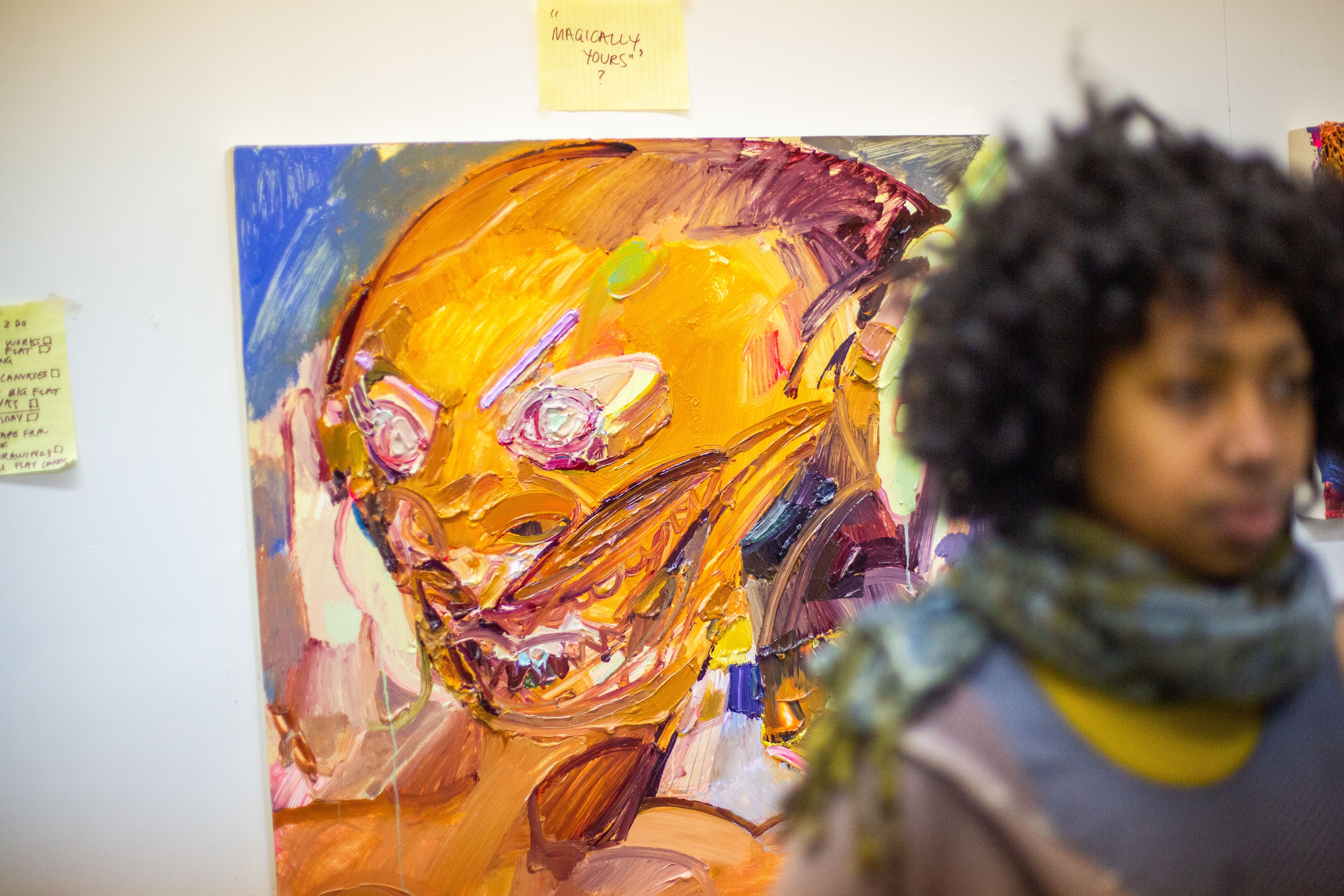
Conversation with Bianca Fields
Interview with the recipient of the February edition of myma Artist Grant, Bianca Fields.
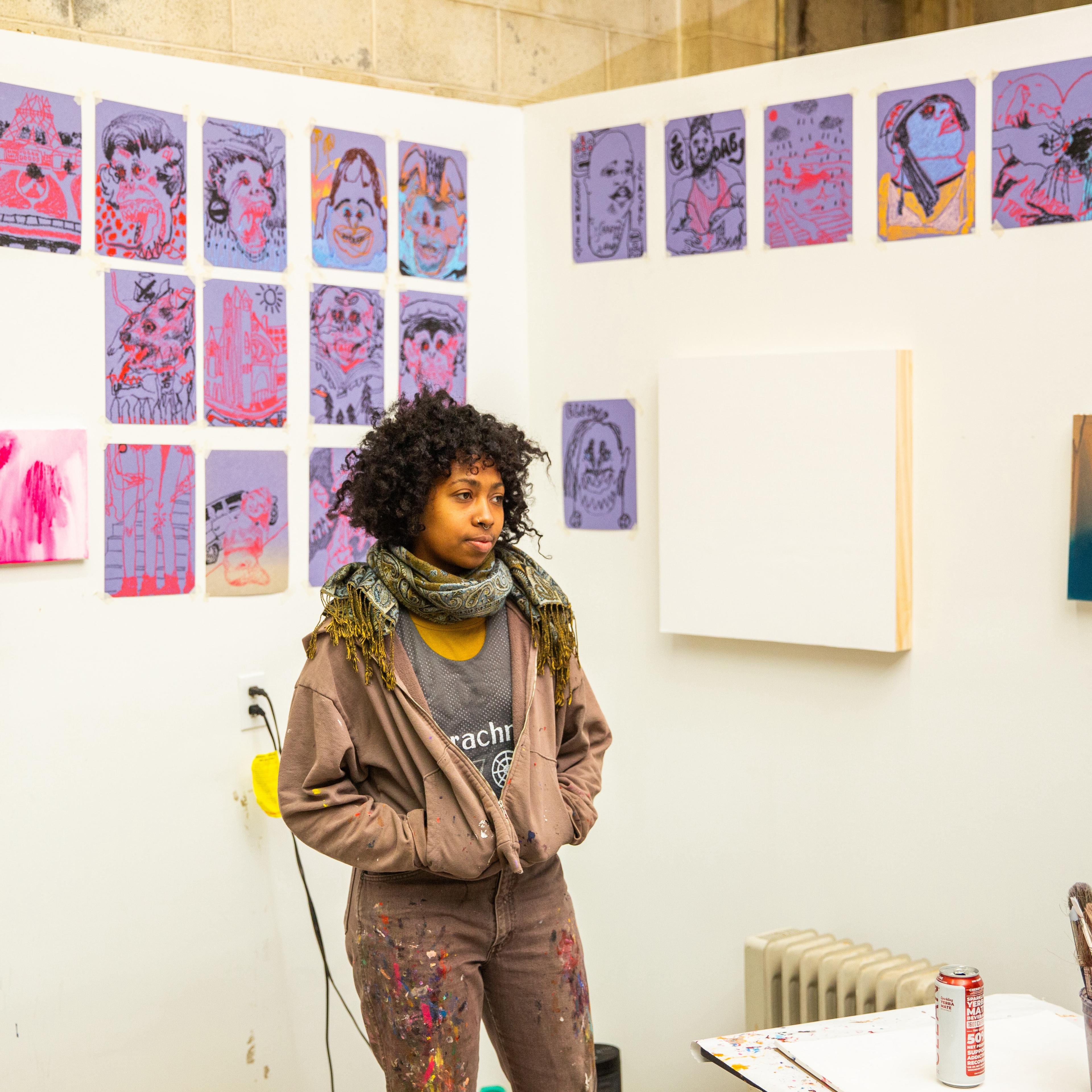
Congratulations for winning the February myma Artist Grant! Can you tell us a bit about yourself and your practice?
I am very honored to have been selected as a recipient for this round’s myma Artist Grant, many thanks to all that contributed to granting me this award.
A bit about myself: I was born in Cleveland, OH and received my BFA in painting from the Cleveland Institute of Art College in 2019. From there, I moved to Kansas City, Missouri and began my studio practice. I’ve always considered the substrates that I paint on to be super important in the building of the works, so that has led me to working primarily on plastic-based yupo paper (in which I will mount down onto wooden panel) and several acrylic-based mediums.
I now currently live in Boston, MA and have a studio here. I am still working primarily in painting. I recently have noticed that my approach to painting has revisited some of the old processes that I cultivated when I was in undergrad and it has been super exciting to rehash.
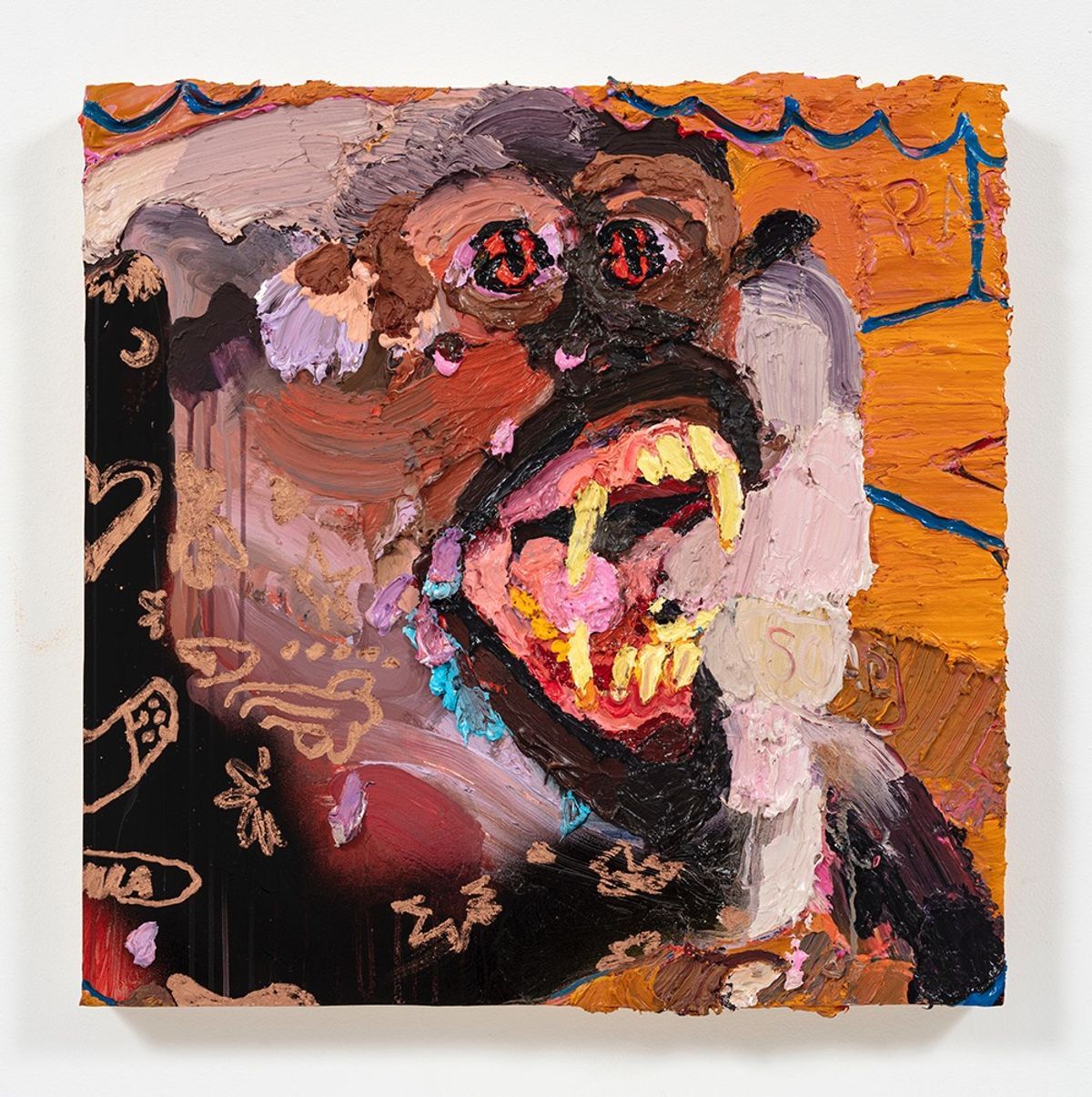
The motif of the monkey appears prominently in your work. Could you elaborate on the significance of this symbol and how it informs your artistic practice?
Yes, the monkey is visible and hard to not acknowledge within the works.
They first started off with a rather murkier appearance in my work back in 2020. From there, I’m not sure what really happened… I started having a desire to feel this sort of arrogance and pomposity within my paintings; something that was formidable and beyond the singularity of my identity. I realized over time that the more that they appeared in my work, I was unraveling a questioning in this idea of this sort of aesthetic distance between people of color vs non people of color.
This was a clear extension from referencing cartoons in my earlier work and a general interest in this idea of “whimsy and play” within early animated short films/cartoons. I began thinking more about how this idea of being free and frolicking could not exist without drawing direct references to the oppression of black Americans, and how I could surface this idea into my physical world of paint. I believe that body of work in particular wants to question how to flatten this atmosphere of innocence, in a way in which freedom sits as a mechanism of resistance, as opposed to naivety.
Introducing animals in my work became an interesting conversation with my previous rumination on cartoons, and I felt like it was time for a more expansive approach in my paintings.
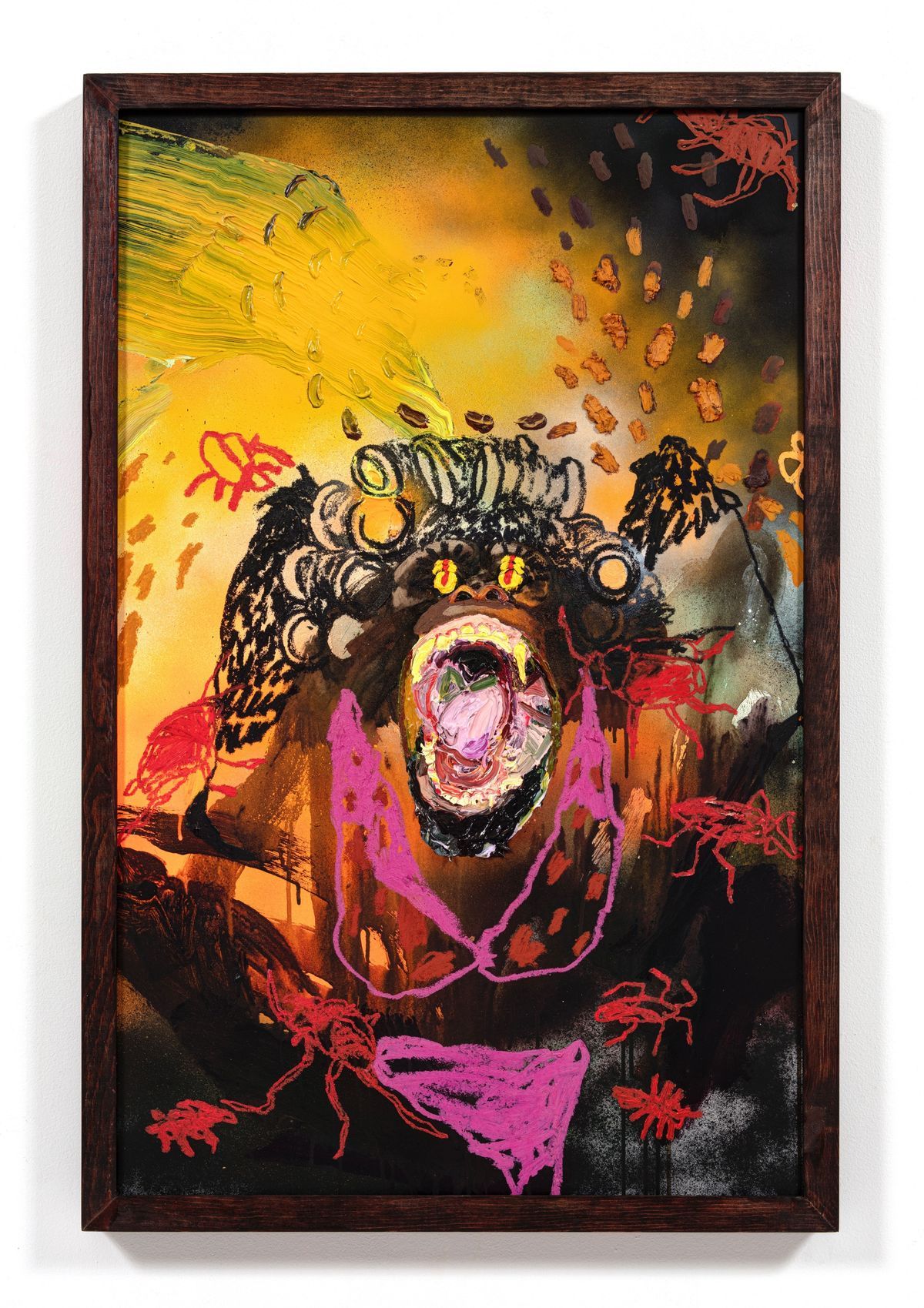
You describe your paintings as having a palpable tension, drawing viewers into complex narratives. How do you approach the process of creating this tension in your work, both visually and conceptually?
I consider the use of agitated brush application and unrestrained amount of paint to almost argue for coherence. I think this process for me is speculative in a way; attempting to create structure in something that almost isn’t there. Perhaps even phantasmal. My paintings, especially as of recently, appear as though they are painted in an immediate way, but in the process I am always searching for beauty and thinking about them in a more slow and delicate way.
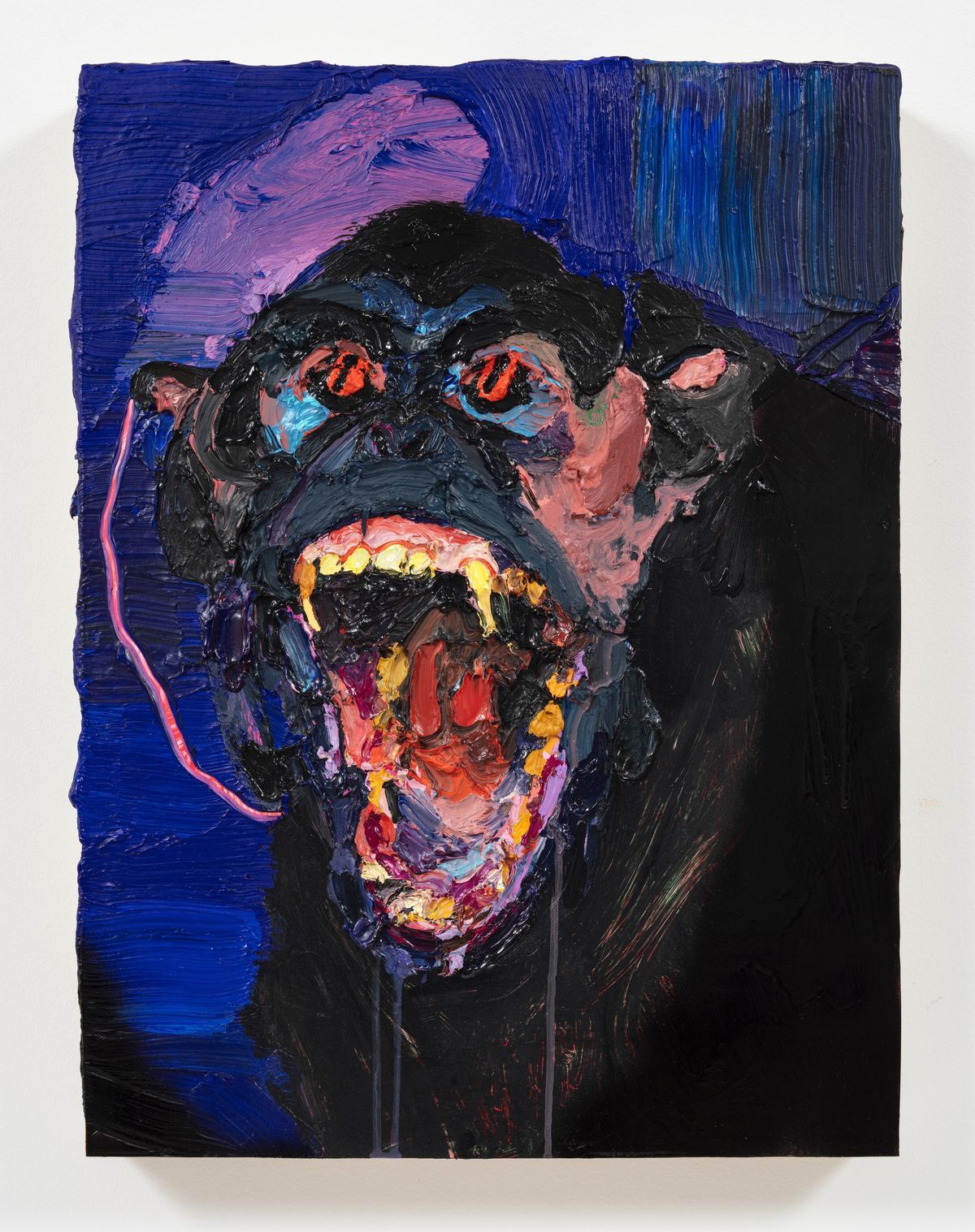
Could you speak to the evolution of your artistic style and technique over time? How has your approach to painting shifted or developed?
I started off painting in sort of a dissociative headspace, I truly think all painters do. I was also very impatient and thinking about my time in undergrad in such a quantum way, and this began to directly affect the way I painted. They were urgent and I wanted to get the material down so I could see it — so then I could move on to the next and see the next.
With this mode of painting, came quickly the revealing of dissatisfaction I had of color combinations, and what felt to be bodily reactions to aesthetics choices that I disliked. I became close minded in a way that actually left me with nothing but a pile of paint tubes and a canvas… it almost felt like I had to restart.
For myself as an artist, I started to realize that I want to feel good while I am working — and that the experience of painting should always be fundamentally positive. This began to inform how I arrived at making more wet-into-wet painting decisions, as I was more concerned with the materiality and essence of the work. Though one may respond to my works as calamitous or formidable, I feel as though this actually helped me further advance how I construct some of the most honest and conventionally beautiful/soft elements in my work. In my paintings, there should always be a way for both components to co-exist.
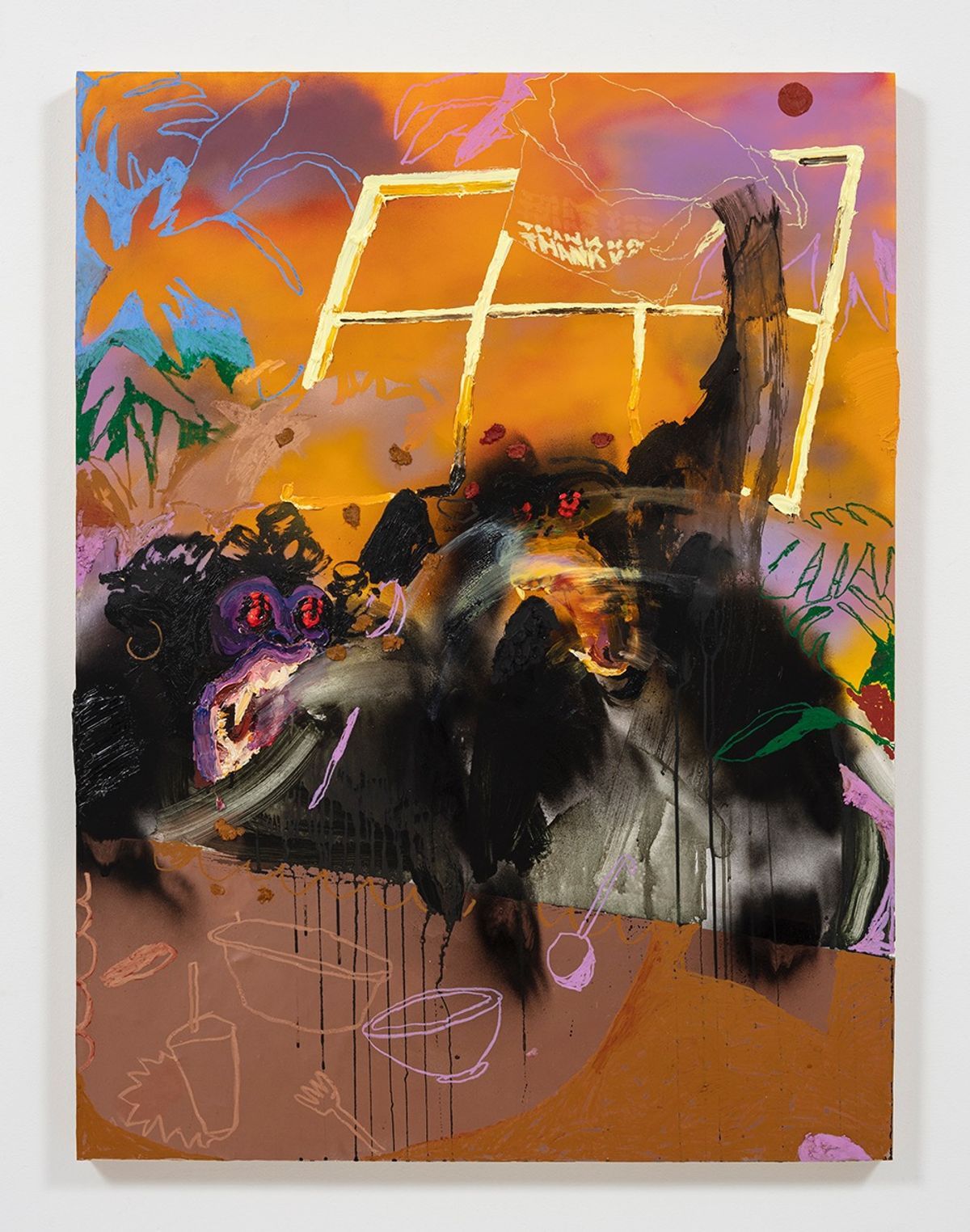
What’s the first thing you do when you enter the studio?
I usually will sit down and face the (completed) work for a bit before starting anything. I give them a fresh look every time, and if they bring feelings of confusion or agitation during my moment of rest, then I will move the work out of my eyeshot. I usually get started working on something shortly after.
Who are some artists you are excited about right now?
Nicola Tyson’s drawings!!! Firelei Baez, Clintel Steed
What do you listen to in the studio? If anything.
Occasionally podcasts, but the way that I work its sort of challenging to do both, so almost always music. I appreciate music. It very much speaks to who I am and my relationship to art. I don’t stay too long on one single genre. I'll surely revisit it, but I find myself researching and listening to things that are tools that support my creative thinking process. Ambient, New Age, Lossless tracks… all of it. I love it!
View Bianca's artist profile on myma here.