Containers for Meaning: An Interview with Kian McKeown
Kian McKeown, recipient of the January myma artist grant, explores imagination as agency through drawing and kinetic sculpture.
Kian McKeown is a New York–based artist and January recipient of the myma artist grant, currently completing his MFA at Hunter College. Working across drawing and sculpture, McKeown approaches imagination as a serious, generative force, one that gives form to longing, anxiety, and the desire for escape. In conversation with artist Anna Berghuis, he speaks about a practice shaped by waking fantasies and the quiet theater of everyday life. His drawings collapse distinctions between self and object, real and imagined, while his kinetic sculptures bring these gestures into motion through deliberately awkward, wavering mechanisms. Influenced by subcultures, horror cinema, and the charged stillness of film imagery, McKeown’s work resists clear narrative, asking not for interpretation but for attention—an invitation to sit with uncertainty, sensation, and desire as they unfold.
Congratulations on winning the January myma grant! Can you tell us a bit about yourself and your practice?
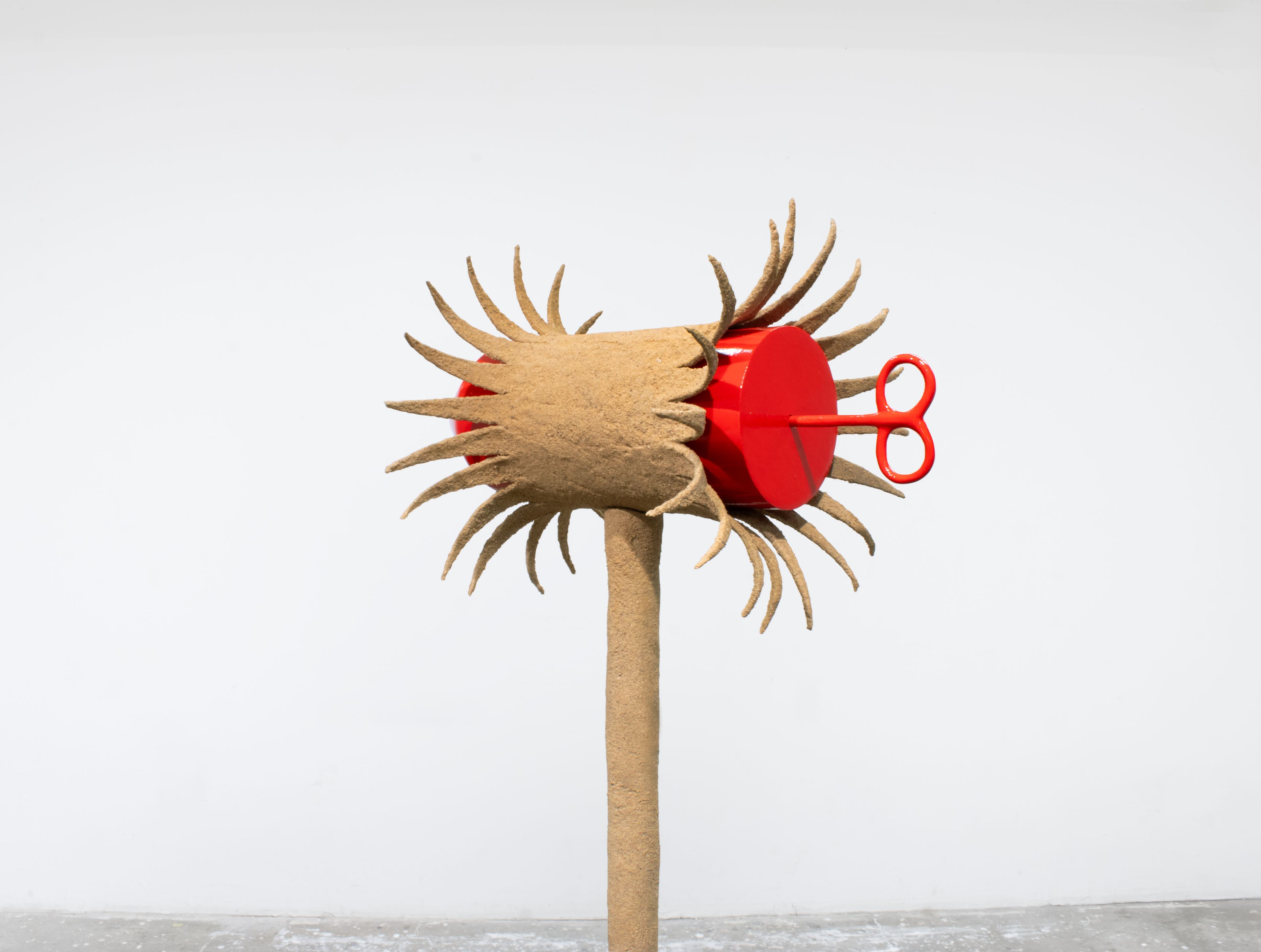
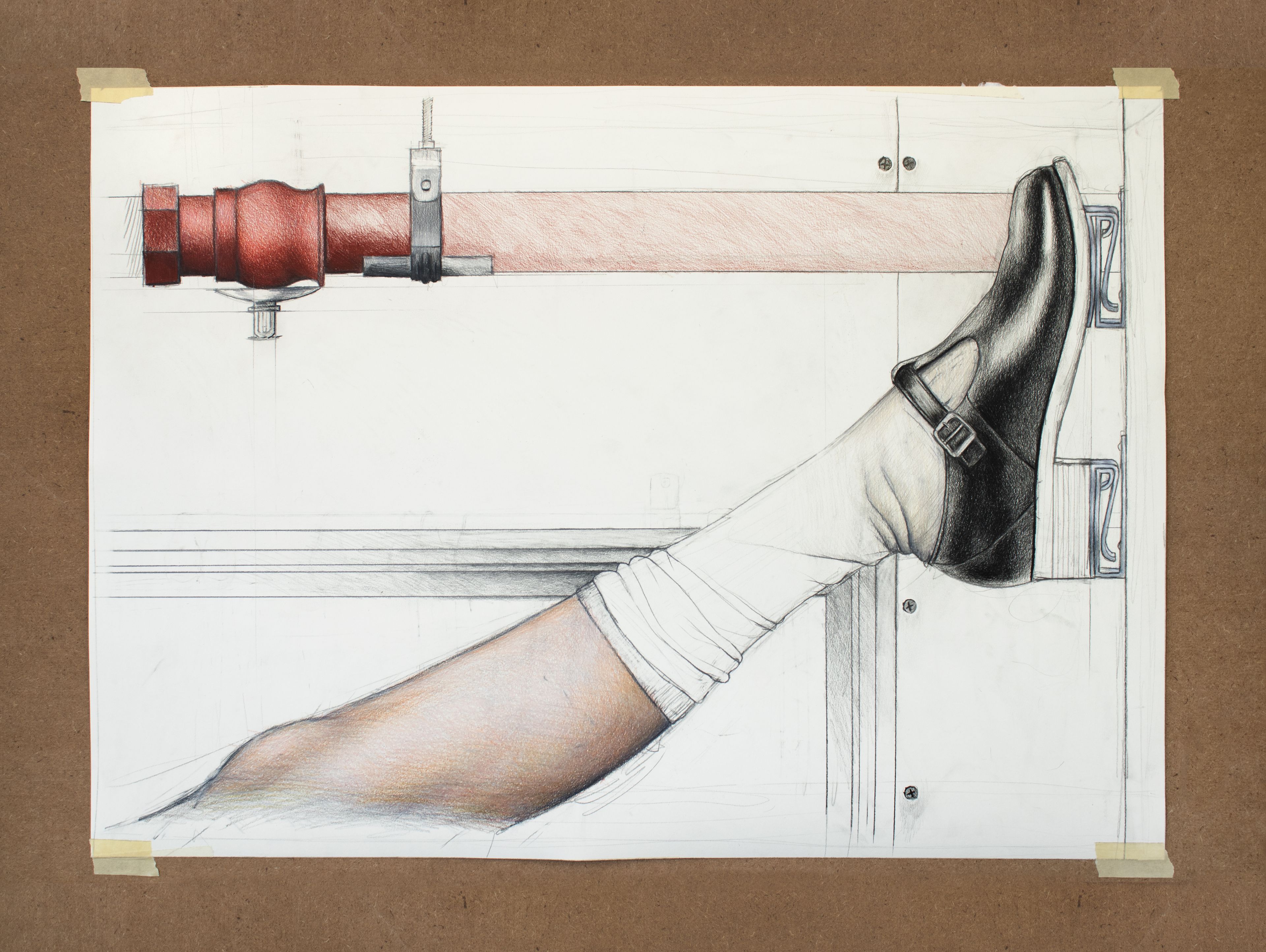
Thank you! I’m an artist based in New York and I work mostly with drawing and sculpture. My work deals with themes of longing, frustration, wonder, and freedom in regards to my own body and my daily waking fantasies. Usually the things I make are proposals for things I wish could exist, or objects and situations that I want you to consider. Lately I have been making kinetic sculptures in order to give a different kind of life to my sculptural work. I have been grappling with how my sculptures and drawings can sit together in space.
When we spoke at your studio you said that you take imagination very seriously. What does it mean for you to take imagination seriously in your work?
I think imagination is a form of agency. We can never achieve all the things we dream of doing, but we can at least imagine doing them, and how those aspirations could potentially materialize. Creativity and imagination are practices to take seriously because they allow us to conceptualize how things could be different and not just how they already are or have been. I like to imagine scenarios that are painful and deviant because I think striving for difference is a way to feel free. In thinking of deviance or delinquency, I refer often to subculture and cultural movements centered around style. For example, by breaking norms of personal presentation through clothing and accessories, groups like the punks were able to achieve some sort of liberation, while also fostering communities committed to living and looking different.
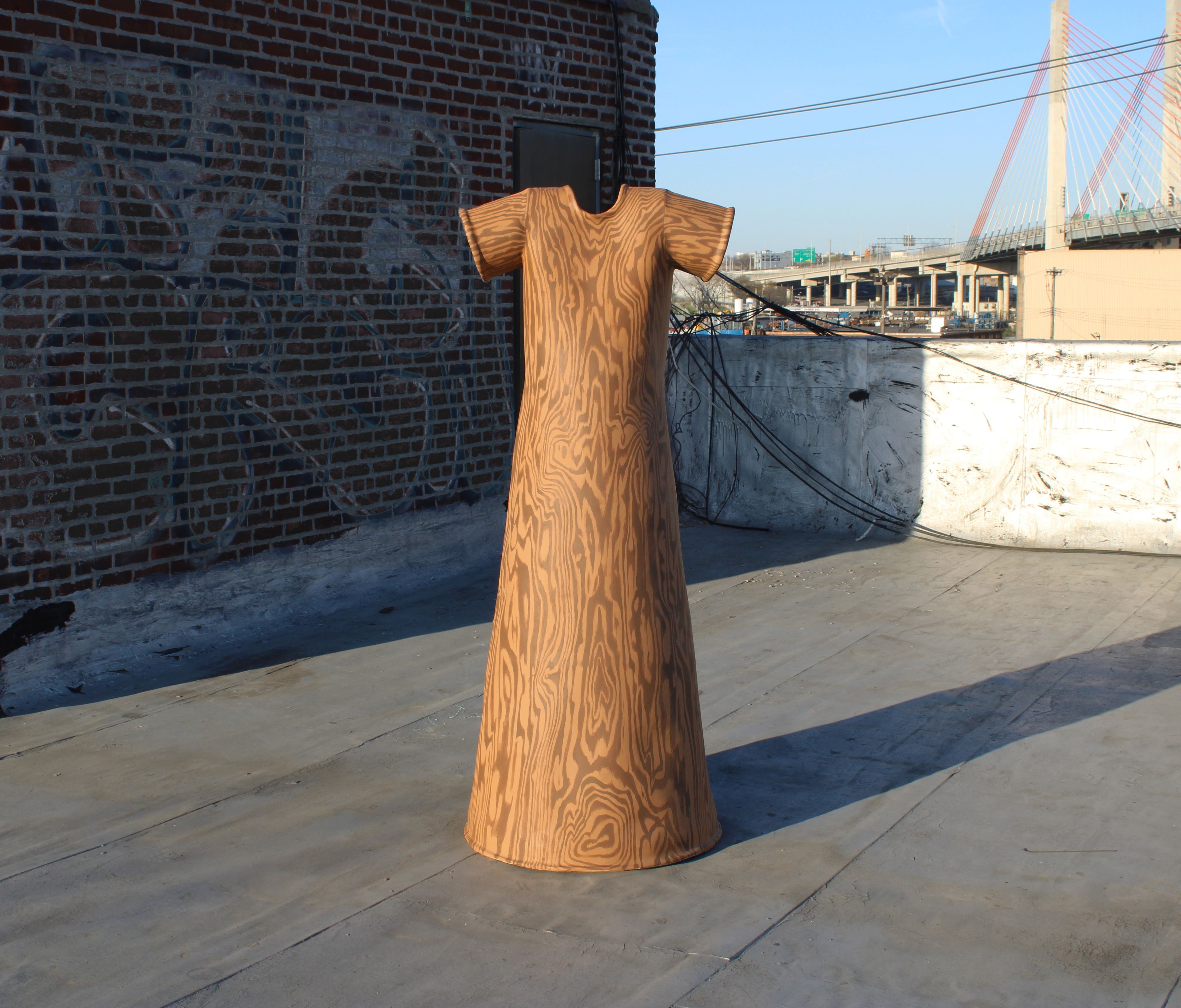
How do you approach sculpture differently from drawing, particularly in capturing movement and physical presence?
Drawing has always come more naturally to me; it feels satisfying to make a drawing, like it’s the most direct way for me to convey a thought. I think I keep making sculptures because it feels like more of a challenge. Every object I make comes with its own set of material troubles, but I find it rich to constantly be attempting to make these impossible objects, while knowing they will never come out how I expected or dreamed they would.
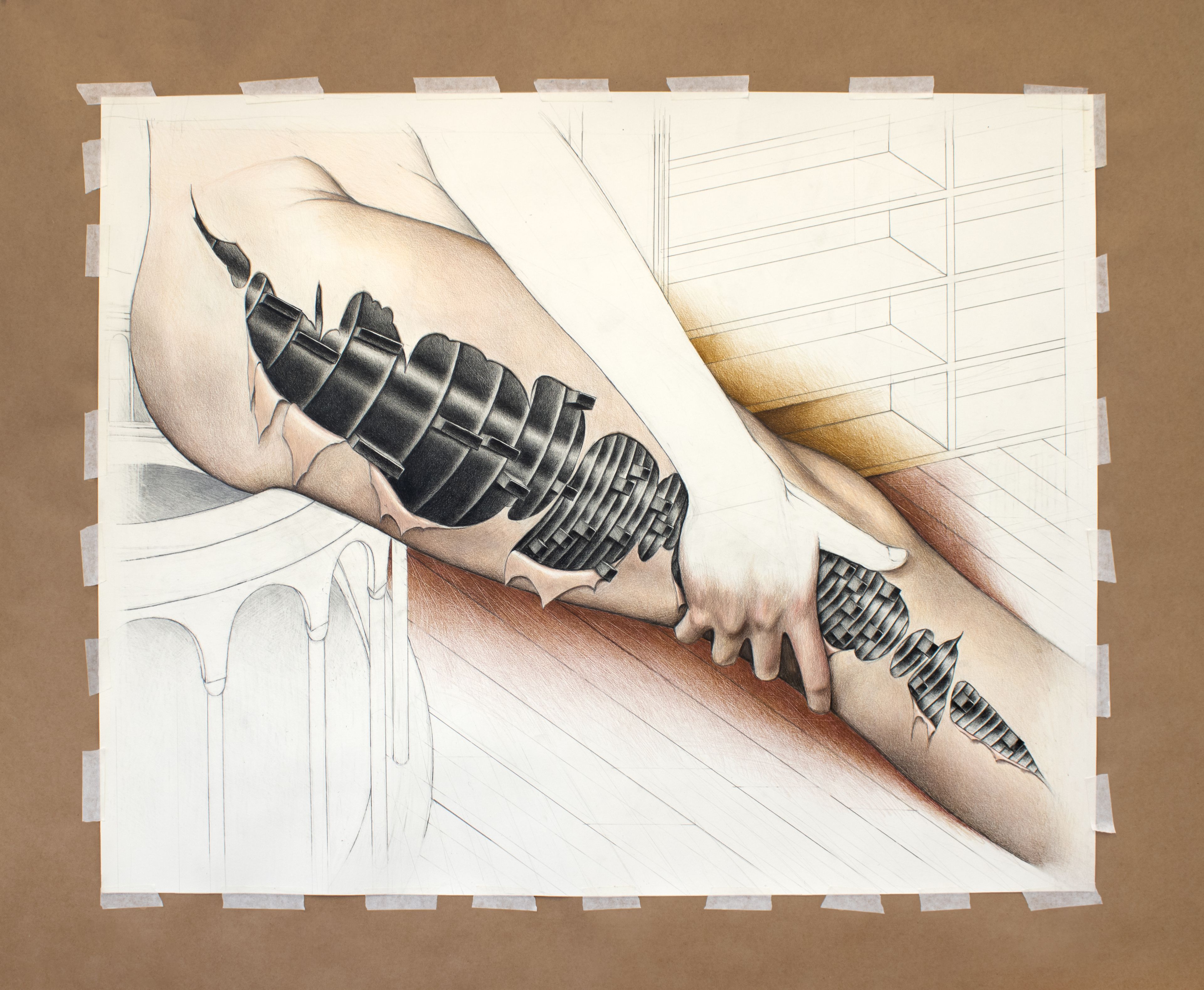
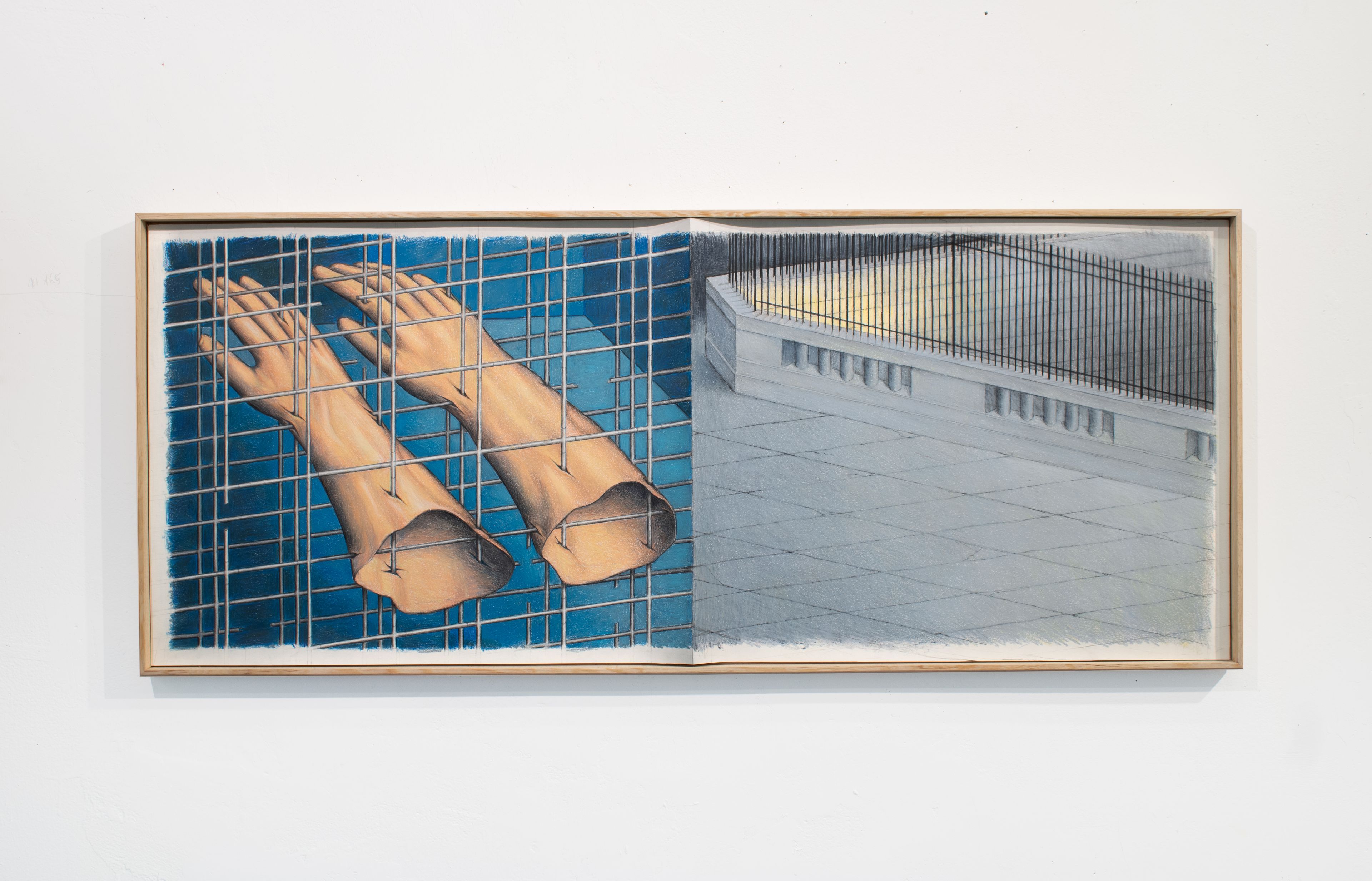
Something I don’t know how to contend with is the fact that though I make sculptures that move, my drawings invariably imply more consequential movement; ripping, piercing, entering. I want to figure out how to make sculptures that feel like they are enacting actual change or affecting something else, while maintaining repetitive motion.
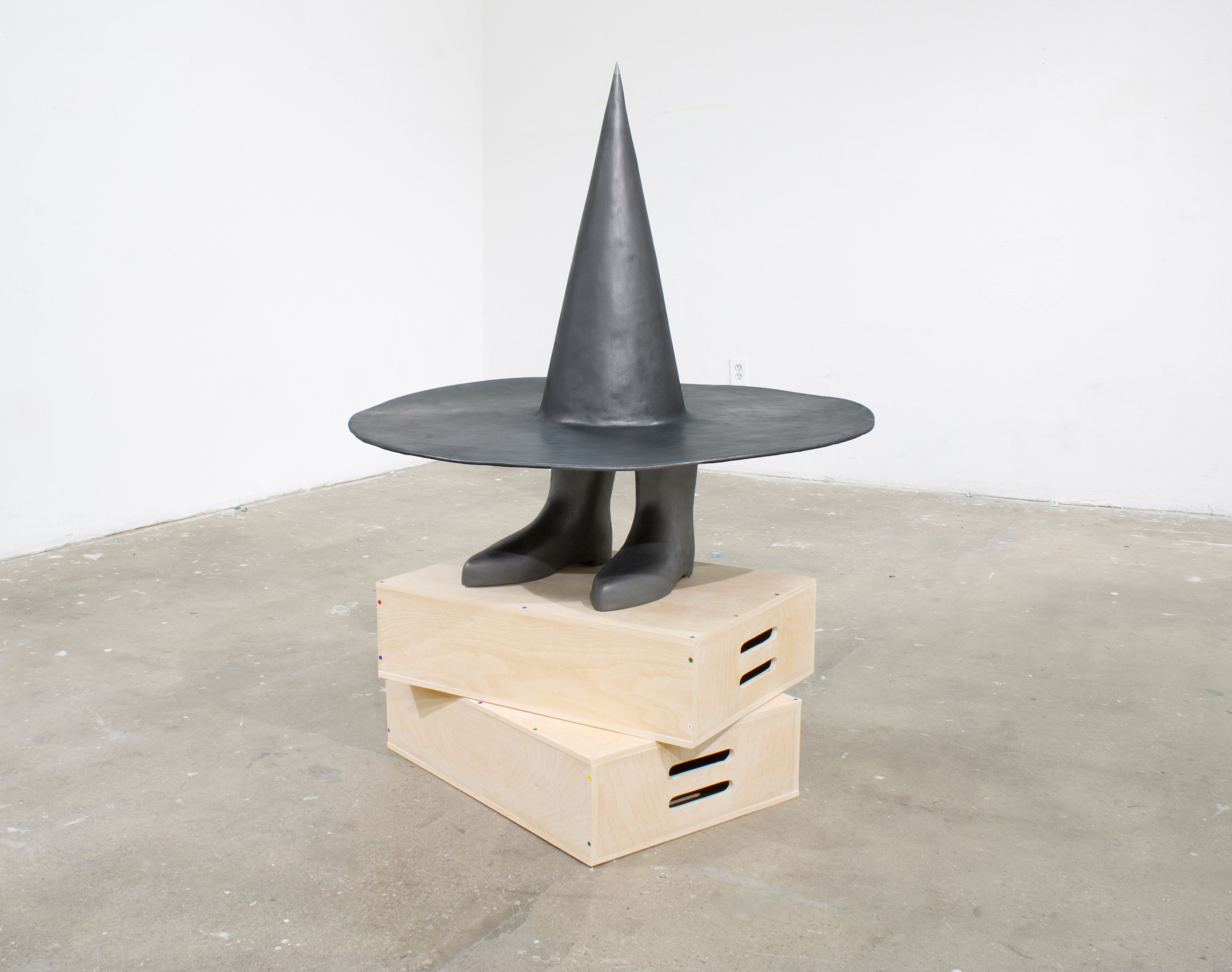
Your work purposefully isn’t titled. What is your reasoning behind this?
I don’t usually title individual works because I don’t want to tell a viewer how to feel about my work. I like to think of my drawings and sculptures as containers for meaning; I can funnel a viewer towards a certain direction through imagery or symbolism, but I always leave any narratives up to the viewer to complete.
That being said, I like to create titles for shows or groupings of works, that feels like a more generative way for me to contextualize my work.
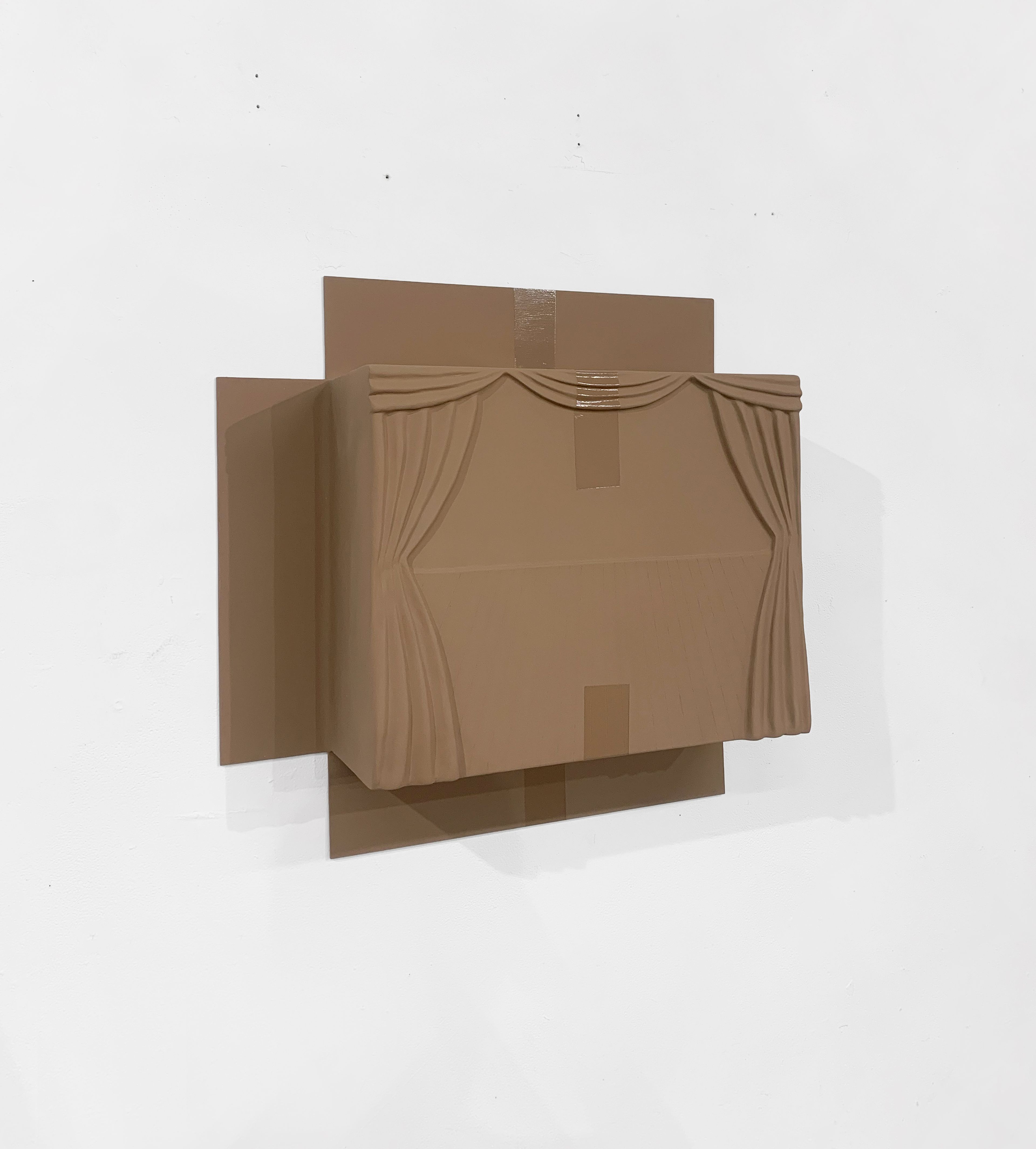
When we met we spoke a bit about 80s horror movies. What about them sparked your interest and how do you see them influencing your work?
I really love Dario Argento films and Italian Giallo films because of how over-the-top theatrical they are and how artificial they feel. I have always had a love of horror and sci fi. I like the idea of constantly having to find new ways to scare or shock people, and so having to be especially creative. My drawings often reference stills from thriller movies as indications of intense drama and action. I am interested in the strange relationship that a film still has with the movie as a whole. A movie is something that is made up of an immense amount of narrative and meaning and significance, and film still basically eliminates all of that. What I love is how there is usually an incredible amount of specificity in the images, related to the set or costumes or whatever but unless you know the movie, it's completely incomprehensible by itself. The richness of the image is the suggestion of a compelling narrative, rather than the actual narrative itself, which is what makes us wonder.
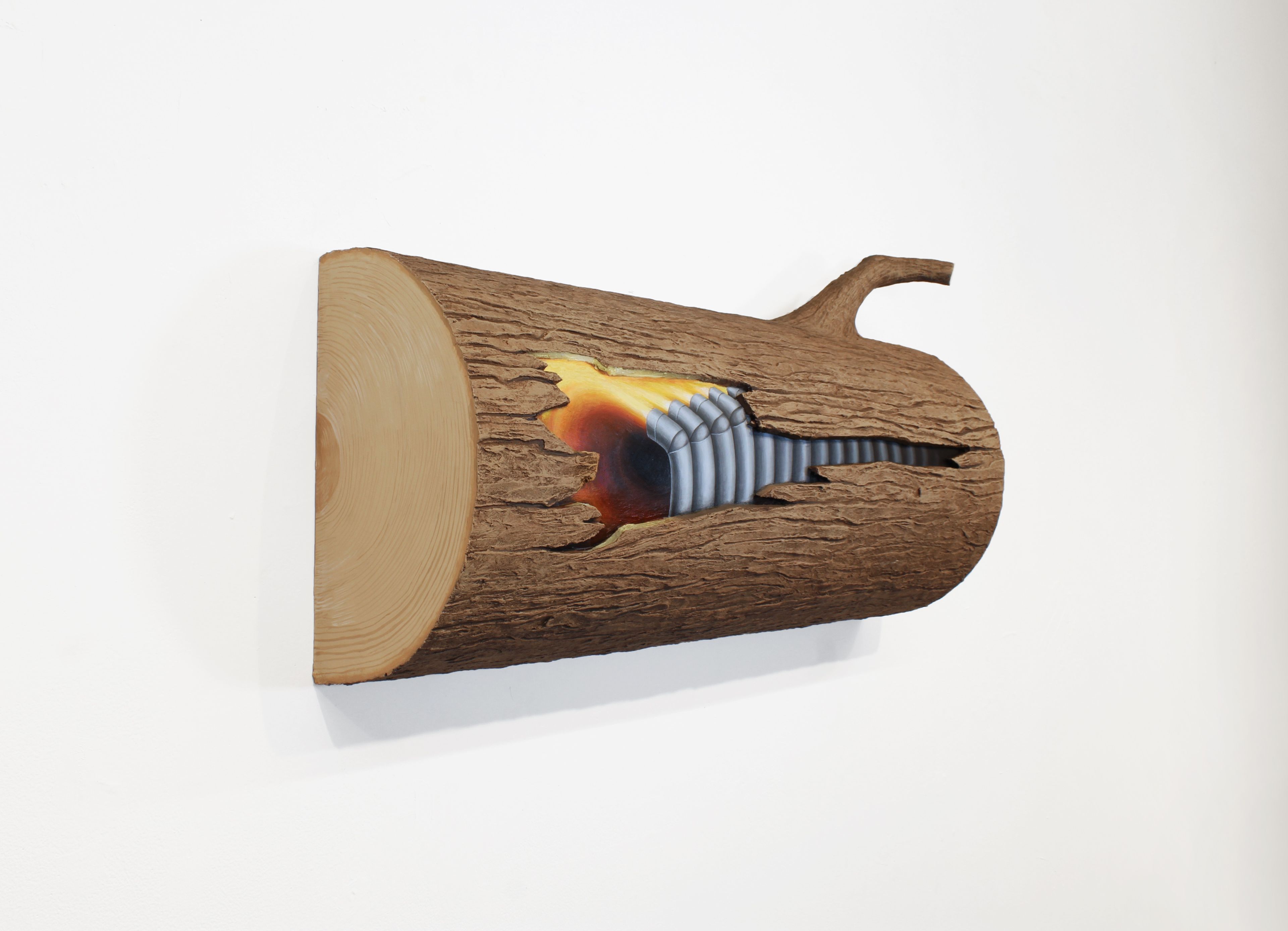
Are there any ideas or projects you’ve been wanting to make but haven’t yet?
Yes, I have been wanting to make a jump rope that swings around by itself, as a sculpture but also as a potentially functional device. I have been planning the mechanics for making this, but unfortunately, even though the idea is simple, the physics are not! It’s quite difficult mimicking human motion through machines.
Kian’s Instagram
Kian’s website